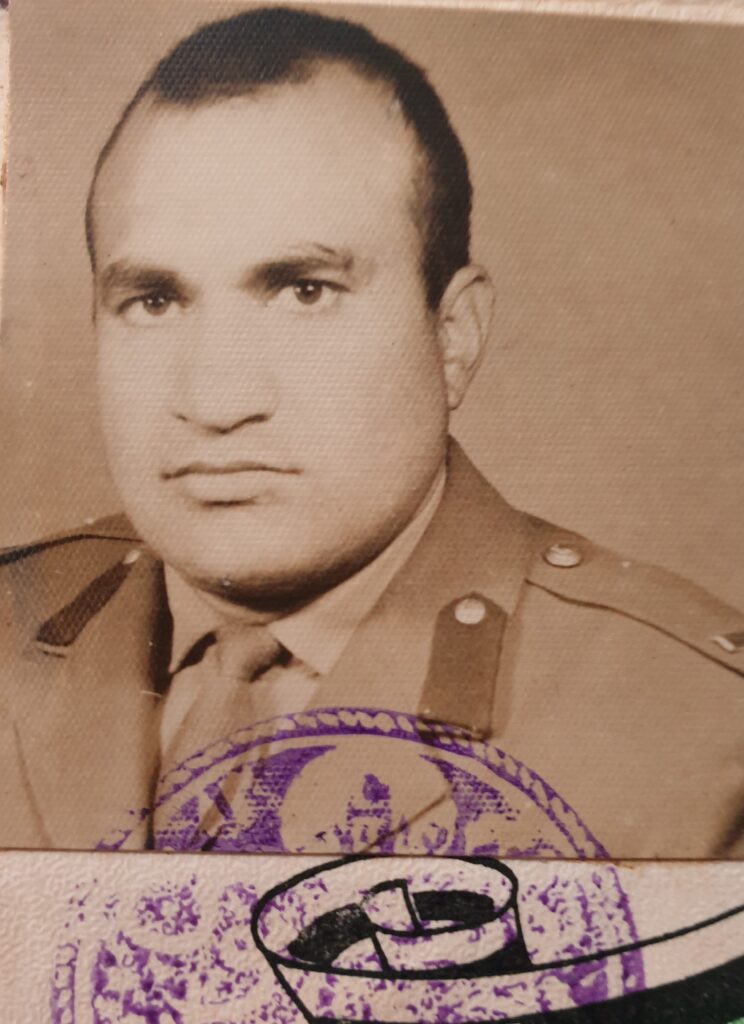
Office held
Deputy Minister of Justice
Senior office in the Ministry of Justice during the Republic of Mohammad Daoud Khan (1973–1978).
Memorial for Samiuddin Safi Zhouand | Safi Zhouand Jurist | Safi Zhouand Diplomat
In remembrance | Afghanistan · twentieth century
A Deputy Minister of Justice of Afghanistan and member of its Supreme Judicial Council, Samiuddin Zhouand belonged to a select circle of jurists who helped draft the legal foundations of a modernising nation. His career was further distinguished by his recognition as a Fulbright Scholar and Eisenhower Exchange Fellow.
He held the power to end a life. He chose, every time, not to use it. Entrusted with authority over the gravest cases a court can hear, he would not set his hand to an execution, even under the full weight of political pressure. He believed that law existed to protect life, not to take it. Remembered by the Zhouand family
Remembered by the Zhouand family
Beyond family memory, Samiuddin Zhouand is named in primary sources — the official history of Afghanistan's Ministry of Justice and the declassified diplomatic cables of the United States.
Senior office in the Ministry of Justice during the Republic of Mohammad Daoud Khan (1973–1978).
A member of its General Assembly — the body U.S. diplomats compared, by analogy, to a Supreme Court.
Named among the trained jurists who wrote Afghanistan's modern legislation; also recorded as deputy and acting Attorney-General.
Samiuddin Zhouand belonged to a small generation of formally trained jurists who helped build the legal architecture of twentieth-century Afghanistan. He rose to serve as Deputy Minister of Justice and, in the records of the period, as deputy and acting Attorney-General under the Republic of Mohammad Daoud Khan.
By the mid-1970s, his counsel was sought beyond Afghanistan’s borders. In 1975, he travelled to the United States, first to the Academy of American and International Law in Dallas, and then to Washington for consultations on the legal framework Afghanistan was developing for narcotics enforcement and prosecution. His visit also included the George Washington University School of Law.
He sat on the Supreme Judicial Council, a body American diplomats, reaching for an analogy, likened to their own Supreme Court. He was also offered a scholarship to continue his studies at the University of Texas.
Those closest to him remember a judge who held the dignity of the law as inseparable from the dignity of the person standing before it. Given power over life and death, he refused to use it.
“The official position of the government is that the lack of quorum has been caused by the Parliamentarians.”
Justice Zhouand left behind essays, addresses and personal papers. They are being gathered, scanned and carefully prepared. As each piece is restored it will be published here.
Archive in preparation...
His reflections on the purpose of justice and the duty owed by the judge to the person in the dock.
Selected public addresses and writings drawn from a long career in the service of the law.
Letters, notes and private writings — the man behind the office, in his own hand.
This archive draws on the declassified diplomatic record and the official history of Afghanistan's Ministry of Justice, alongside the memories of his family. Where the public record is silent, we say so - and we welcome anyone who can add to it.